• Web Development
  • Mobile Apps
  • Branding
  • SEO
  • UI/UX
  • Consulting
  • Policies
  • Support
  • About Us
  • Our Work
Web Development
  • Overview
  • E-commerce Shop
  • Education LMS
  • Freelance Platform
  • Job Board
  • Healthcare Platforms
  • Bookings & Rentals
  • Cryptocurrencies
  • Logistics & Shipping

Build a Warehouse Management System That Optimizes Inventory, Storage, and Fulfillment

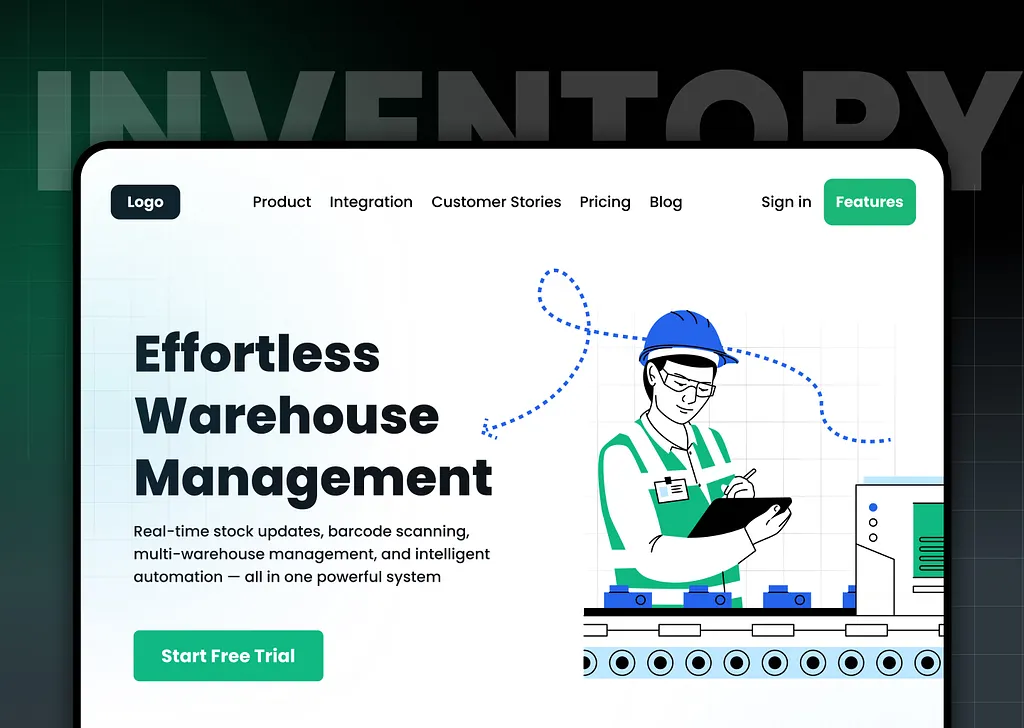
Launch a powerful warehouse management system that centralizes inventory tracking, order processing, and storage optimization into one scalable platform. We design enterprise-grade systems engineered to reduce errors, improve fulfillment speed, and increase operational visibility. Turn your warehouse into a structured digital operation.

What Is a Warehouse Management System?

A warehouse management system, WMS, is a centralized digital platform that enables businesses to manage inventory, storage locations, order picking, packing, and shipment processes efficiently.

Real-Time Inventory Visibility

Track stock levels, locations, and movement across warehouses instantly.

Intelligent Picking & Packing Workflows

Optimize order fulfillment with guided picking routes and automation.

Multi-Warehouse & Multi-Channel Integration

Connect inventory with e-commerce stores, ERP systems, and logistics platforms.

Market Insights

A data-driven view of the global warehouse management opportunity, competitive landscape, and operational challenges shaping modern inventory, fulfillment, and logistics optimization platforms.

Global Market Size (TAM)

Total addressable warehouse management markets, expressed in $ Billion

Key Growth Drivers

Structural trends accelerating warehouse management system adoption

Industry Evolution (2015–2025)

Warehouse management system market growth over ten years, in $ Billion

Projected Growth Potential

Forward-looking market expansion driven by e-commerce fulfillment and supply chain automation

Major Global Players

Estimated global market share (%) by leading warehouse management platforms

Problems This Platform Solves

Ranked by inventory accuracy and operational efficiency impact (score out of 100)

Six Ways the Platform Makes Money

Business Model. A Warehouse management systems typically operate as subscription-based enterprise software. Revenue scales as businesses increase inventory volume and warehouse locations.

1. Monthly SaaS Subscription Plans

Charge recurring access fees based on warehouse size.

2. Per-User Licensing Model

Generate revenue based on warehouse staff accounts.

3. Per-Warehouse Pricing

Offer scalable plans based on number of facilities.

4. Advanced Analytics & Automation Modules

Provide premium features as add-ons.

5. ERP & E-Commerce Integration Fees

Monetize system integrations with third-party platforms.

6. Implementation & Training Services

Charge for onboarding, configuration, and support.

Ready to Transform Your Warehouse Into a Data-Driven Fulfillment Hub?

From inventory tracking and picking automation to shipment coordination and performance analytics, we build warehouse management systems engineered for efficiency, scalability, and operational excellence. Let’s digitize your supply chain infrastructure.

Core Platform Features

A comprehensive warehouse management system for inventory control, order fulfillment, storage optimization, and complete warehouse operations management for efficient logistics and supply chain operations.

Inventory Management

Real-time Stock Tracking

Monitor inventory levels in real-time.

Barcode Scanning

Barcode-based inventory tracking.

QR Code Scanning

QR code inventory management.

SKU Management

Manage stock keeping units.

Stock Level Alerts

Automatic low stock notifications.

Expiry Date Tracking

Monitor product expiration dates.

Batch/Lot Tracking

Track inventory by batch numbers.

Serial Number Tracking

Track items by serial numbers.

Warehouse Layout & Storage

Zone Management

Divide warehouse into storage zones.

Rack Management

Manage storage racks and shelves.

Bin Location Tracking

Track exact storage locations.

Storage Optimization

Optimize storage space utilization.

Temperature Zones

Manage climate-controlled areas.

Secure Storage Areas

Manage restricted access areas.

Weight Capacity Tracking

Monitor storage weight limits.

Warehouse Mapping

Digital warehouse layout mapping.

Order Fulfillment

Order Processing

Process customer orders efficiently.

Picking Optimization

Optimize picking routes and methods.

Packing Management

Manage packing operations.

Shipping Integration

Integrate with shipping carriers.

Picking Lists

Generate optimized picking lists.

Packing Slips

Create packing slips automatically.

Order Weighing

Weigh packages for shipping.

Shipping Labels

Generate shipping labels.

Receiving & Put-away

Receiving Management

Manage inbound shipments.

Receiving Checklists

Digital receiving inspection forms.

Put-away Optimization

Optimize storage placement.

Damage Reporting

Report damaged received goods.

Quantity Verification

Verify received quantities.

Purchase Order Matching

Match receipts to purchase orders.

Quality Inspection

Quality control for received goods.

Receiving Time Tracking

Track receiving process times.

Picking Strategies

Wave Picking

Batch picking by time waves.

Zone Picking

Assign pickers to specific zones.

Batch Picking

Pick multiple orders simultaneously.

Discrete Picking

Pick single orders individually.

Automated Picking

Support for automated systems.

Pick Path Optimization

Optimize picking routes.

Priority Picking

Handle urgent orders first.

Pick List Generation

Generate optimized pick lists.

Inventory Counting

Cycle Counting

Regular partial inventory counts.

Physical Inventory

Complete warehouse stock takes.

Mobile Counting

Count inventory using mobile devices.

Variance Reporting

Report inventory discrepancies.

ABC Analysis Counting

Focus counting on high-value items.

Scheduled Counting

Schedule regular inventory counts.

Random Sampling

Random inventory spot checks.

Count Result Export

Export counting results.

Shipping & Dispatch

Carrier Management

Manage multiple shipping carriers.

Package Consolidation

Consolidate multiple items.

Shipping Weight Calculation

Calculate shipping weights.

Shipping Cost Calculation

Calculate shipping costs.

Shipping Documentation

Generate shipping documents.

Tracking Number Generation

Generate tracking numbers.

Dispatch Scheduling

Schedule shipment dispatches.

Route Planning

Plan delivery routes.

Reporting & Analytics

Inventory Reports

Generate inventory analysis reports.

Performance Analytics

Warehouse performance analysis.

Turnover Reports

Inventory turnover analysis.

Cost Analysis

Warehouse operation cost analysis.

Custom Reports

Create customized reports.

Trend Analysis

Identify operational trends.

KPIs Dashboard

Key performance indicators.

Data Export

Export warehouse data.

Integrations

E-commerce Platforms

Connect with online stores.

API Integration

REST API for custom connections.

Accounting Systems

Integrate with accounting software.

ERP Systems

Connect with enterprise systems.

Shipping Carriers

Integrate with shipping providers.

Scanning Equipment

Connect with scanning devices.

Automation Systems

Integrate with warehouse robotics.

Cloud Services

Connect with cloud platforms.

Mobile & Handheld

Mobile Warehouse App

Complete mobile warehouse functions.

Tablet Support

Optimized for tablet devices.

Mobile Scanning

Scan using mobile device cameras.

Offline Mode

Function without internet.

Real-time Sync

Automatic data synchronization.

Push Notifications

Mobile task notifications.

Mobile Printing

Print labels from mobile.

Multi-language Support

Available in multiple languages.

Our Technologies

An exhaustive, production-ready technology stack covering frontend interfaces, backend systems, mobile applications, payments, communication, AI, and infrastructure.

Development Scope & Phases

A structured, milestone-driven development approach designed to ensure clarity, technical stability, and long-term scalability.

Phase 1, Discovery & Planning

1 / 7

We align business goals, market realities, and technical feasibility before any development begins.

Business & Market Analysis

Understanding competitors, users, and positioning.

Requirements Mapping

Functional, technical, and operational documentation.

System Architecture

Scalable platform and infrastructure planning.

Product Roadmap

Milestones, dependencies, and delivery phases.

Key Milestones

  • Stakeholder discovery sessions completed
  • Requirements documentation approved
  • Architecture design validated
  • Execution roadmap finalized

Phase 2, Product Architecture

2 / 7

Designing robust, scalable systems that form the foundation of your platform.

Technical Blueprint

Comprehensive system architecture and data flow design.

Database Architecture

Optimized data models, schemas, and storage strategies.

Security Framework

Authentication, authorization, and data protection layers.

Infrastructure Design

Cloud architecture, scaling strategy, and deployment plan.

Key Milestones

  • Technical specification document completed
  • Database schema finalized
  • Security architecture approved
  • Infrastructure design validated

Phase 3, UI / UX Design

3 / 7

Crafting intuitive, engaging interfaces that deliver exceptional user experiences.

Wireframing & Prototyping

Interactive wireframes and clickable prototypes for validation.

Visual Design System

Brand-aligned UI components, color schemes, and typography.

Responsive Design

Seamless experiences across all devices and screen sizes.

User Testing

Usability testing and feedback integration for refinement.

Key Milestones

  • Wireframes approved by stakeholders
  • Visual design system established
  • Responsive layouts validated
  • User testing feedback incorporated

Phase 4, Core Development

4 / 7

Building the foundational platform with clean, maintainable, and scalable code.

Backend Development

Robust server-side logic, APIs, and business rules implementation.

Frontend Development

Interactive user interfaces with modern frameworks and libraries.

Mobile App Development

Native or cross-platform mobile applications for iOS and Android.

Real-time Features

Live updates, notifications, and real-time communication systems.

Key Milestones

  • Backend APIs fully functional
  • Frontend components implemented
  • Mobile apps MVP ready
  • Real-time systems operational

Phase 5, Integrations

5 / 7

Connecting your platform with essential third-party services and systems.

Payment Gateways

Secure integration with Stripe, PayPal, and other payment processors.

Mapping & Location Services

Google Maps, Mapbox, or other geolocation service integration.

Communication APIs

Email, SMS, and push notification services integration.

Analytics & Monitoring

Google Analytics, Mixpanel, or custom analytics implementation.

Key Milestones

  • Payment processing tested and working
  • Location services integrated
  • Communication systems operational
  • Analytics tracking implemented

Phase 6, Testing & QA

6 / 7

Rigorous testing ensures reliability, security, and optimal performance.

Automated Testing

Unit, integration, and end-to-end test suites for all components.

Security Testing

Penetration testing, vulnerability scanning, and security audits.

Performance Testing

Load testing, stress testing, and optimization for scalability.

User Acceptance Testing

Real-world scenario testing with actual users and stakeholders.

Key Milestones

  • All automated tests passing
  • Security audit completed
  • Performance benchmarks met
  • User acceptance testing approved

Phase 7, Launch & Scale

7 / 7

Deployment, monitoring, and scaling strategies for long-term success.

Deployment Strategy

Staged rollout, canary releases, or full production deployment.

Infrastructure Setup

Production servers, CDN, load balancers, and monitoring tools.

Performance Monitoring

Real-time monitoring, alerting, and performance optimization.

Scaling Strategy

Horizontal scaling, database optimization, and traffic management.

Key Milestones

  • Platform deployed to production
  • Infrastructure monitoring active
  • Performance baselines established
  • Scaling plan documented and ready

Why Build Your Warehouse Management System With Digital 2Moro

Warehouse systems require precise inventory logic, scalable backend architecture, and seamless integrations. We design enterprise-grade supply chain platforms built for high-volume environments.

Structured Inventory Architecture

We design systems that manage stock movement with precision and visibility.

Revenue-Optimized SaaS Framework

Monetization models are embedded directly into operational workflows.

Scalable Infrastructure for Growing Operations

Our platforms support expanding warehouse networks without performance limitations.

End-to-End Product Execution

From workflow mapping and UX planning to deployment and optimization, we manage the full lifecycle.

Frequently Asked Questions (FAQs)

No questions found

Try adjusting your search term.