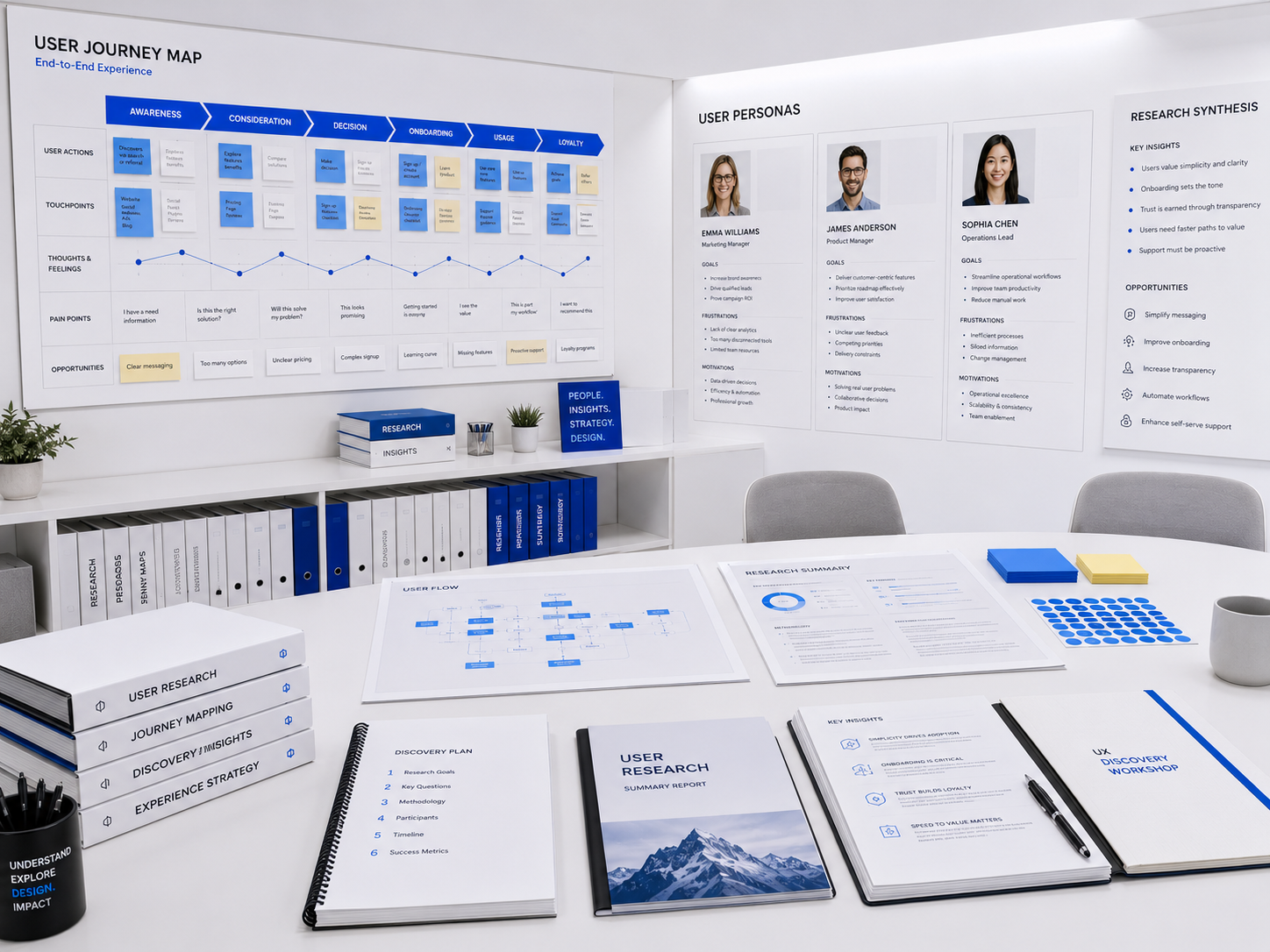
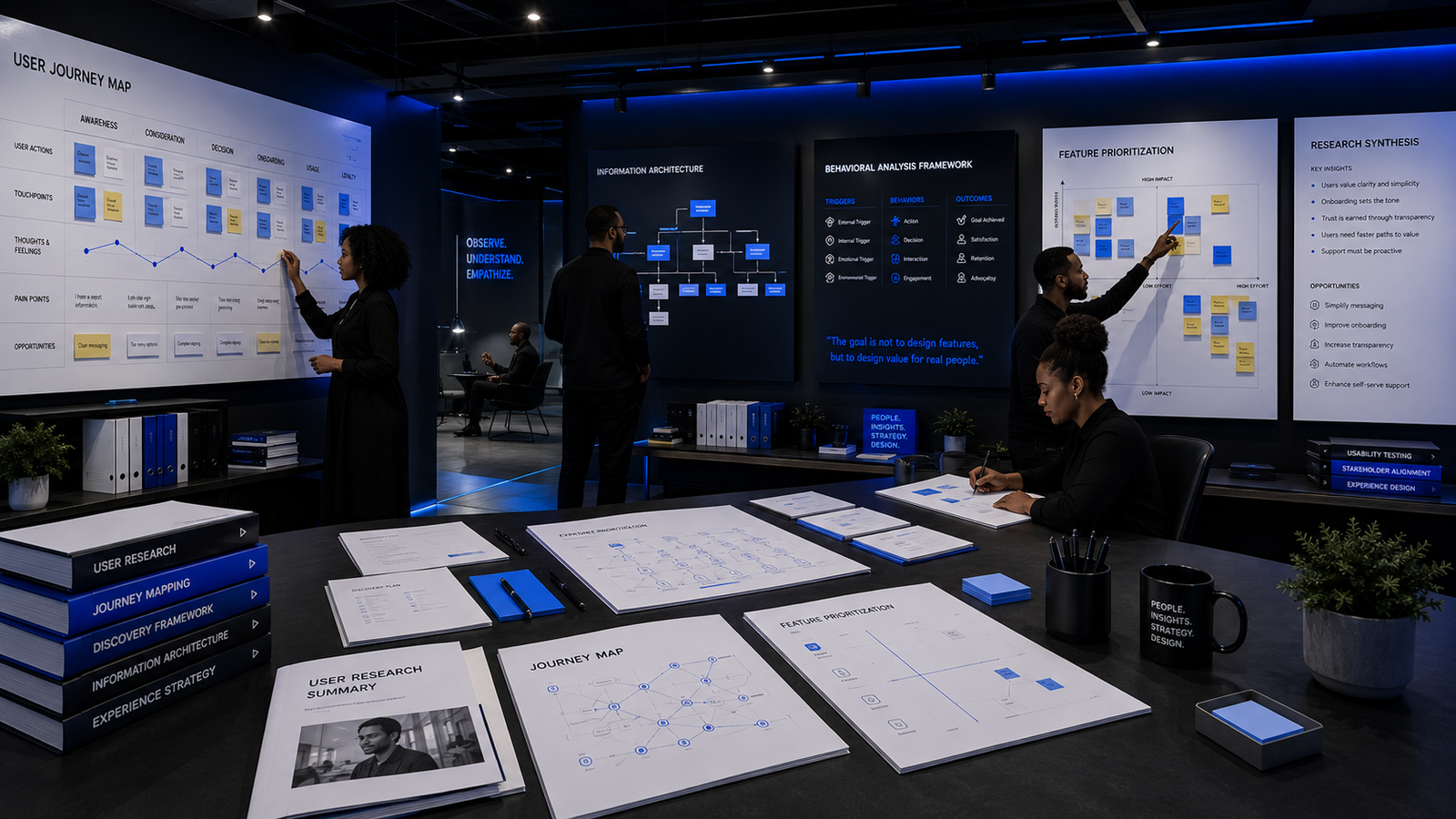
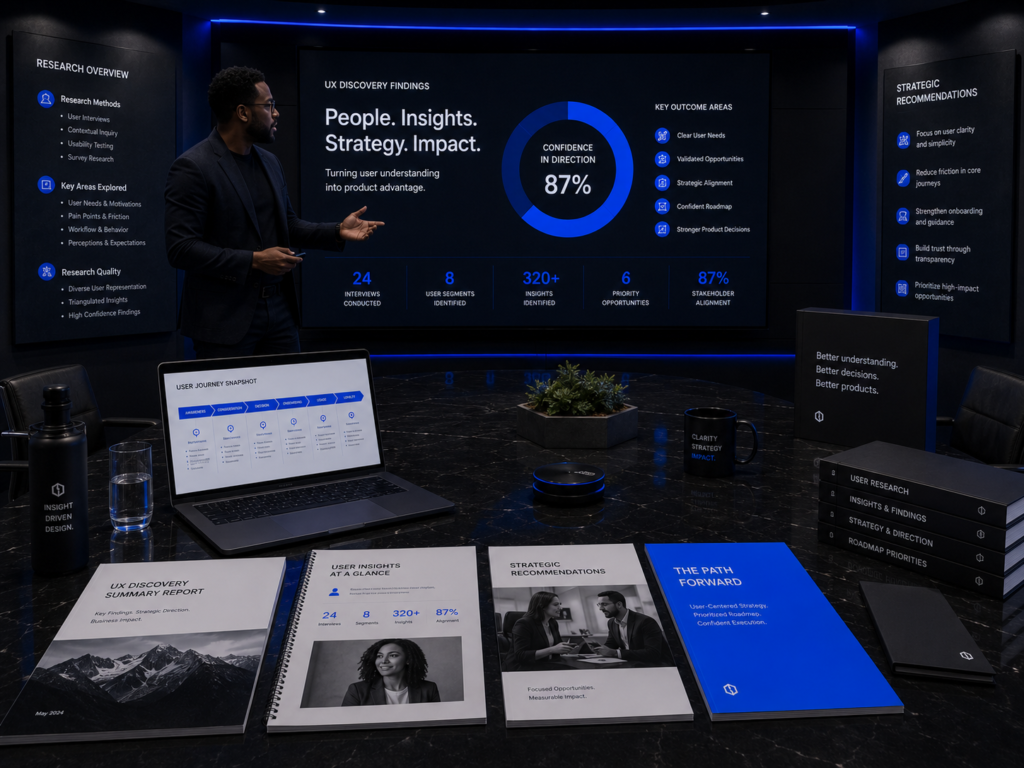

Guessing, Debating, and Hoping Users Will Figure It Out
- Building features based on internal opinions
- Unknown friction points waiting to frustrate users
- Assumed user journeys with no validation
- Expensive rework discovered after launch
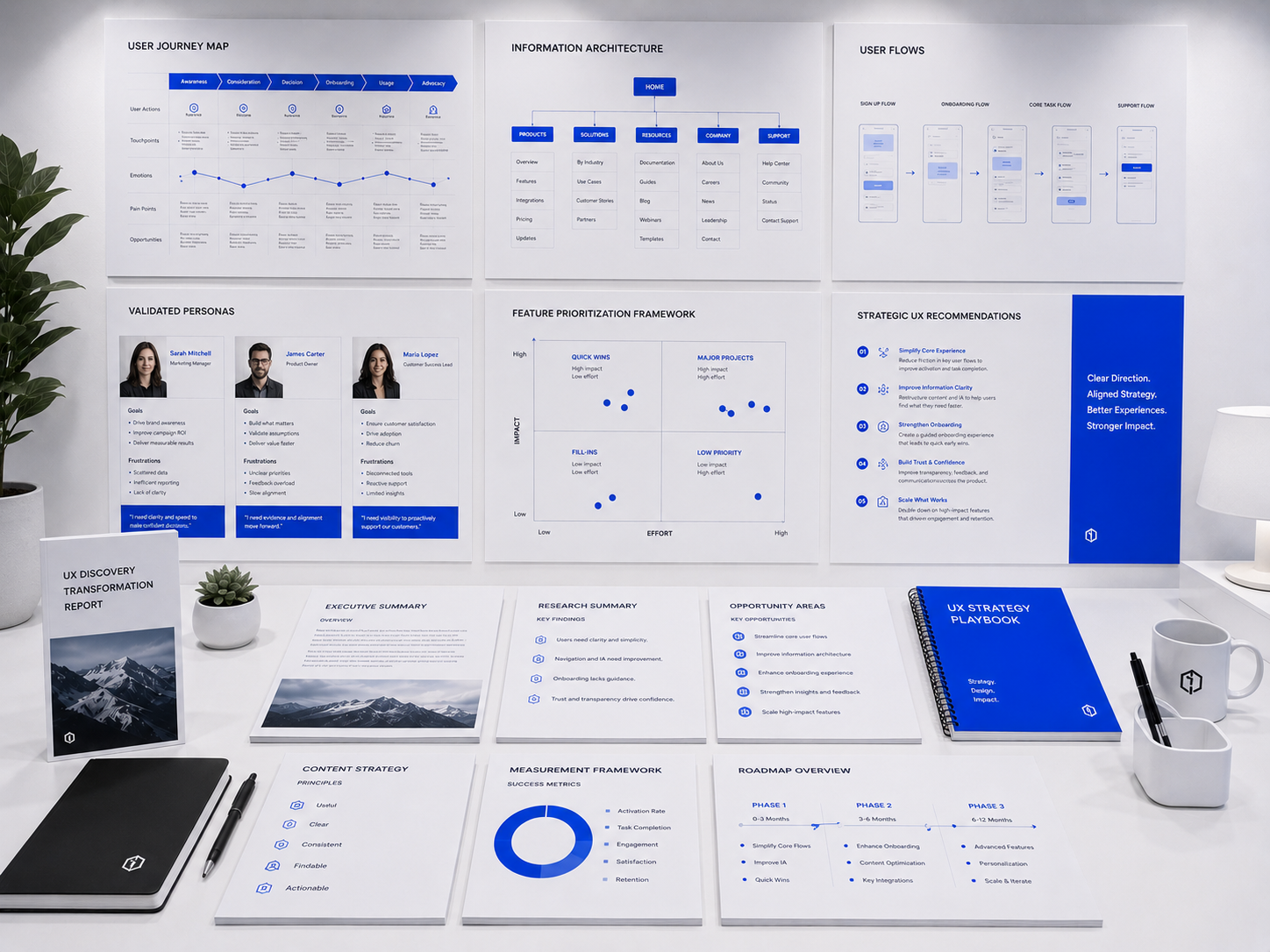
The UX Discovery Sprint is a focused research engagement that validates your product idea with real users before you invest in development. We test your concept, map user journeys, identify friction points, and deliver a clear UX direction backed by evidence. Build with confidence instead of crossing your fingers.
You have a product idea. Your team believes in it. Investors are interested. But you have not tested it with actual users. The features you think are essential may be irrelevant to real customers. The workflow you designed may create frustration instead of satisfaction. The problem you are solving may not be urgent enough for anyone to pay for a solution. Development is expensive. Rework after development is far more expensive. A UX Discovery Sprint validates your direction with real user evidence before a single line of code is written.
Your team debates features based on personal preference, competitor imitation, or the loudest voice in the room. None of these are reliable proxies for what actual users need or will pay for.
Without watching real people interact with your product concept, you cannot predict where they will get confused, abandon a task, or fail to understand your value proposition.
You have a mental model of how users will move through your product. But without structured journey mapping and validation, you are designing for a user that may not exist.
Fixing UX problems after code is written requires redesign, redevelopment, and retesting. The same issues identified during discovery can be resolved with a sketch and a conversation.
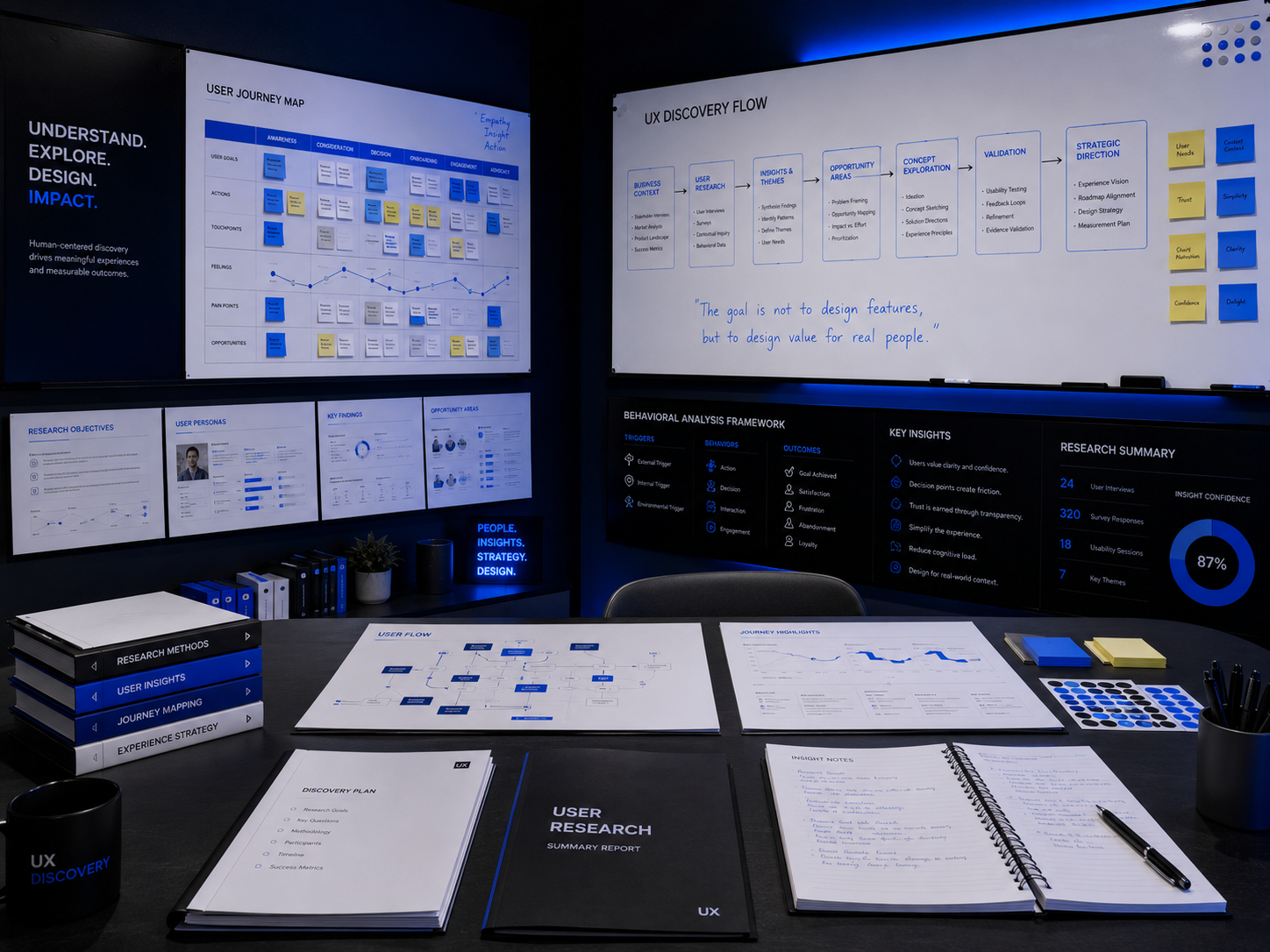
The UX Discovery Sprint is a rapid research engagement that tests your product concept with real users, maps the journeys that matter, identifies friction before development, and delivers a clear, evidence-backed UX direction. You stop guessing what users want and start knowing.
Know whether your product idea solves a real problem for real users before development begins.
Documented pathways showing exactly how users will move through your product to achieve their goals.
Pain points and usability issues surfaced and resolved during discovery instead of after launch.
Your development team builds the right features the first time because the UX direction is proven.
A complete UX discovery package with user research findings, validated journeys, and a clear design direction ready to guide development.
What real users told us, what they need, and what that means for your product direction.
Real user profiles built from research data, not conference room guesses.
How users actually move through their tasks with pain points and opportunities mapped at every step.
What broke, what confused users, and what needs to change before development starts.
How your content and features should be organized so users find what they need.
What to build first, what to save for later, and what to drop entirely based on user evidence.
The consolidated UX direction that guides design and development with confidence.
All findings and recommendations presented in a format ready for investors and leadership.
A rapid research methodology that moves from assumptions to validated evidence in a structured sprint format.
We define the research objectives, identify target user segments, and design the study protocol that will generate the evidence you need.
Defining exactly what we need to learn about your users, their needs, and their behaviors to inform product direction.
Defining the profile of users we need to engage for meaningful research including demographics, behaviors, and context.
Creating structured interview guides, usability test scenarios, and task scripts that generate consistent comparable data.
Scheduling sessions, preparing prototype materials if needed, and configuring recording and note-taking systems.
We conduct structured research sessions with real users to understand their context, needs, pain points, and reactions to your product concept.
One-on-one conversations with target users exploring their goals, workflows, frustrations, and current solutions.
Observing users interact with your concept or prototype to identify where they succeed, struggle, and abandon tasks.
Capturing every session with detailed notes, timestamped observations, and direct user quotes for evidence-based analysis.
Adjusting research questions and test scenarios between sessions as early patterns emerge to deepen understanding.
We analyze all research data to identify the patterns, insights, and user needs that will drive product decisions.
Organizing observations and quotes into thematic clusters to reveal the underlying patterns in user behavior and needs.
Building evidence-based user personas that represent the distinct segments, goals, and behaviors discovered during research.
Ranking user frustrations by frequency, severity, and impact to identify the issues that matter most to resolve first.
Surfacing the unmet needs and underserved moments where your product can deliver disproportionate value.
We map the end-to-end user journeys that matter most and validate them against the research evidence.
Documenting how users currently solve their problems including the workarounds, tools, and frustrations in their existing workflow.
Mapping the ideal user experience your product should deliver with pain points eliminated and opportunities captured.
Testing the proposed journeys against user expectations and research evidence to confirm they match real needs and behaviors.
Identifying every point where users interact with your product and ensuring each one supports the overall experience.
We translate research insights into a clear, actionable UX strategy that guides design and development decisions.
Establishing the core UX principles that will guide every design decision based on what users actually need and value.
Structuring content and features so users can navigate intuitively and find what they need without friction.
Evaluating every proposed feature against user value, business impact, and development effort to define the phased roadmap.
Consolidating all research, insights, journeys, and recommendations into a single actionable strategy document.
We present all findings and recommendations to your team and stakeholders, ensuring the research translates into action.
Compelling presentation of research insights, user evidence, and strategic recommendations designed for leadership and investor audiences.
Interactive session with product and development teams to walk through findings, answer questions, and align on next steps.
Organized delivery of all research data, recordings, notes, personas, journey maps, and the UX strategy brief in accessible formats.
Guidance on moving from discovery into design, including readiness assessment for MVP UI/UX or Full Product UI/UX.
Workdone: A unified brand and digital foundation for a multi-subsidiary Pan-African financial group building institutional credibility across emerging African markets.
Workdone: A complete brand and business foundation preparing a cleaning startup for market entry and investment readiness.
Get complete interface design for a launch-ready minimum viable product your developers can build immediately.
Get Started Free Get Started Free
End-to-end product design covering every screen, state, user type, and platform for a product ready to scale.
Get Started Free Get Started Free
Multi-sided platform design for marketplaces connecting buyers, sellers, and administrators with balanced experiences.
Get Started Free Get Started Free
Data-rich interface design for admin panels, analytics platforms, and operational tools your team will love using.
Get Started Free Get Started FreeTry adjusting your search term.
The most expensive product decision is building something nobody wants. Validate your direction with real users. Identify friction before it becomes rework. Know exactly what to build and why before a single line of code is written.
Get Started Free Get Started Free